

The PEth test: the importance of Phosphatidylethanol (PEth) in driving tests
Individuals seeking a review or lifting of a driving ban must add supporting documents to their file. Phosphatidylethanol (PEth) test results play a crucial role here.
Demonstration of alcohol abstinence
PEth provides an indication of alcohol use in the past month, while alcohol itself is detectable only up to 10-12 hours after ingestion. Regular PEth testing can help demonstrate long-term abstinence, which is relevant for driving tests.
Legal applications of PEth
In addition to drunk driving, there are other legal situations in which the PEth test can be useful. Consider, for example:
- Family law cases: In custody cases as evidence of a parent controlling his or her alcohol use.
- Employment law cases: Employees who have lost their jobs because of alcohol-related problems.
- Criminal cases: Demonstrating a change in alcohol consumption may affect sentencing.
Practical information
- Sample collection is always performed under supervision by experienced AZ Delta medical staff and always unambiguously identified.
- PEth and alcohol are tested in the blood at the same time.
- Testing frequency is weekly. Make an appointment online here.
- Results are delivered digitally via secure email within 8 working days.
- The cost is 150 euros (including VAT).
Scientific background of PEth
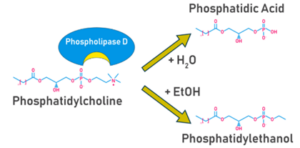
PEth consists of a group of compounds of phospholipids with ethanol formed in red blood cells under the influence of the enzyme phospholipase D.
The enzyme phospholipase D has multiple isoforms with different pharmacokinetics. There are about 50 PEth phospholipid homologs with variable length and saturation. PEth 16:0/18:1 is the most prominent at 37% and is measured for that reason.
Specific properties of PEth as an alcohol marker
PEth is only present in the blood after alcohol consumption. It has a half-life (the time required for half of a given substance to break down) of 4-10 days, but varies widely among different individuals.
After 1 alcohol consumption, PEth can be detected 1 to 2 hours later. With regular alcohol consumption, it accumulates in red blood cells.
PEth vs. CDT?
Although CDT (Carbohydrate-Deficient Transferrin) has long been used as a biomarker for long-term alcohol consumption, Phosphatidylethanol (PEth) has increasingly proven to be a superior indicator. Here are some reasons why PEth is often preferred to CDT:
- More sensitive to short-term and moderate alcohol consumption: PEth can be detected even after a single alcohol intake, whereas CDT will be elevated only with long-term and heavy alcohol consumption (>50-80 g/day for 1-2 weeks).
- Longer detection period: while CDT normalizes after 2-3 weeks of abstinence, PEth has a longer half-life and can demonstrate total abstinence from alcohol for a longer period (1 month on average).
- Less influenced by other factors: CDT is not a good marker for individuals with liver disease or certain genetic transferrin variants. PEth is less influenced by these.
- Objective measurement: PEth tests provide an objective measurement of actual alcohol use, whereas CDT tests can provide “false negative” results. A “normal” CDT is not probative of abstinence or absence of problematic alcohol use.
- Better correlation with alcohol intake: PEth has a direct relationship with the amount of alcohol ingested, making it a more reliable indicator of actual alcohol consumption. PEth is a much better marker to demonstrate moderate to intermittent alcohol intake.
Conclusion
The PEth test not only provides a valuable tool for restoring driving privileges, but also has broad applications in various legal contexts.
Through reliable and objective measurements, it can help demonstrate alcohol abstinence and influence decision-making in legal matters.
Do you have questions about the PEth test? Please do not hesitate to contact us via our contact form or call 051/920.911


